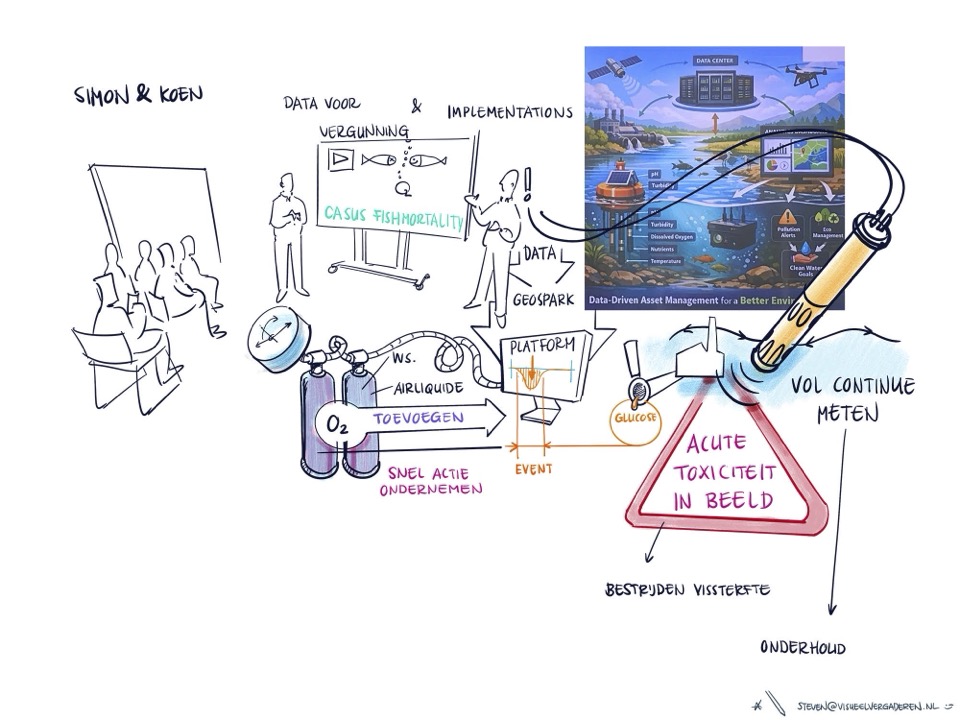
Innovative monitoring technologies and artificial intelligence are playing an increasingly important role in understanding and improving water quality. In this workshop, Koen De Witte and Simon Nachtergaele from Vlaamse Milieumaatschappij (VMM) demonstrated how advanced sensors, smart alarms and AI-based methods are being applied to monitor and interpret water quality in Flanders.
Water Quality Probes: Insights and the Current State of Flanders' Rivers
The workshop focused on how changes in water quality can be better understood and predicted. The speakers demonstrated how water quality probes, smart alarms and AI-based methods are being applied in Belgium to strengthen monitoring capabilities and improve data interpretation.
Modern sensors continuously collect large volumes of environmental data, providing valuable insights into the condition of water systems. However, as the workshop demonstrated, raw data alone is not sufficient. Advanced data analysis and expert interpretation remain essential for developing robust AI prediction models that can identify meaningful patterns and detect environmental incidents at an early stage.
One of the highlights of the session was a case study examining the long-term record of fish mortality in the River Dender and its relationship with sensor data. Participants also experienced demonstrations of sensor-based technologies and learned how this data can be interpreted to better assess water quality.
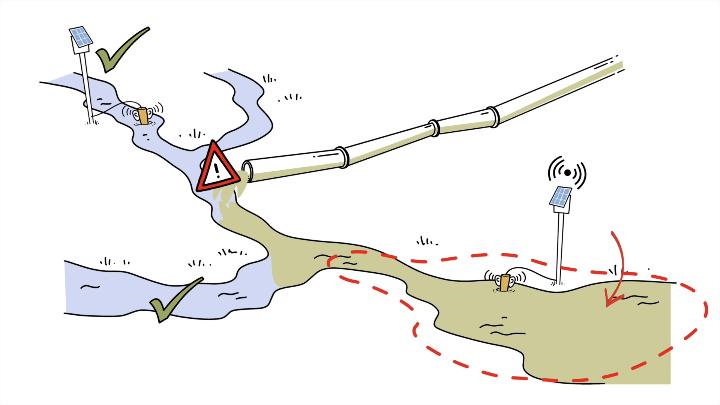
The workshop further introduced the Watertrack dashboard, which provides region-specific water quality alarms and supports timely decision-making. Throughout the session, the speakers emphasised the importance of combining sensor technology, data interpretation, legislative frameworks and domain expertise to effectively monitor and manage water quality.
The workshop offered valuable practical insights into how technology and human expertise complement each other in creating more effective, data-driven approaches to protecting Europe's water resources.