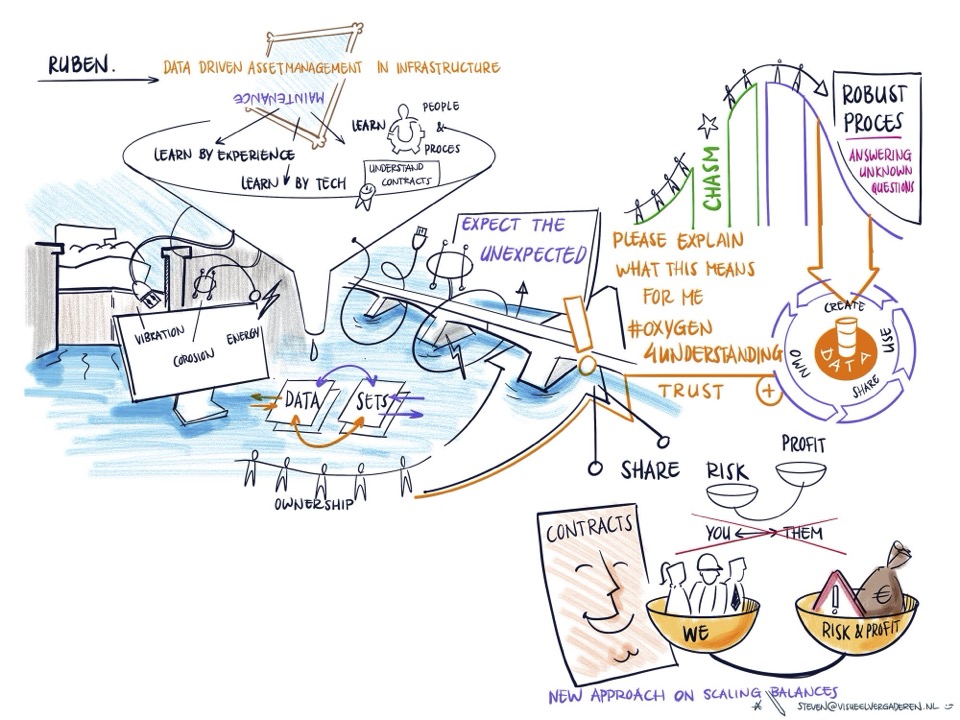
Data-driven asset management is transforming the way infrastructure is managed, maintained and monitored. During the BEPROACT Upskilling Event, Ruben Ogink (Kwartiermaker Infra at Stichting World Class Maintenance and Director at Hello New Day BV) shared his expertise on the practical challenges of implementing data-driven asset management and the organisational transformation required to make it successful.
Data-driven asset management (DGAM) is here to stay. What began in the early 2010s as experiments with IoT sensors and smart maintenance has evolved into large-scale programmes that are reshaping how assets are managed and maintained.
Since 2015, Ruben Ogink has been closely involved in this transition, with a particular focus on public infrastructure in the Netherlands, including bridges, sluices, pumping stations and railways. In the early years, the main challenges were technological: adapting new solutions for public infrastructure and demonstrating their value in practice.
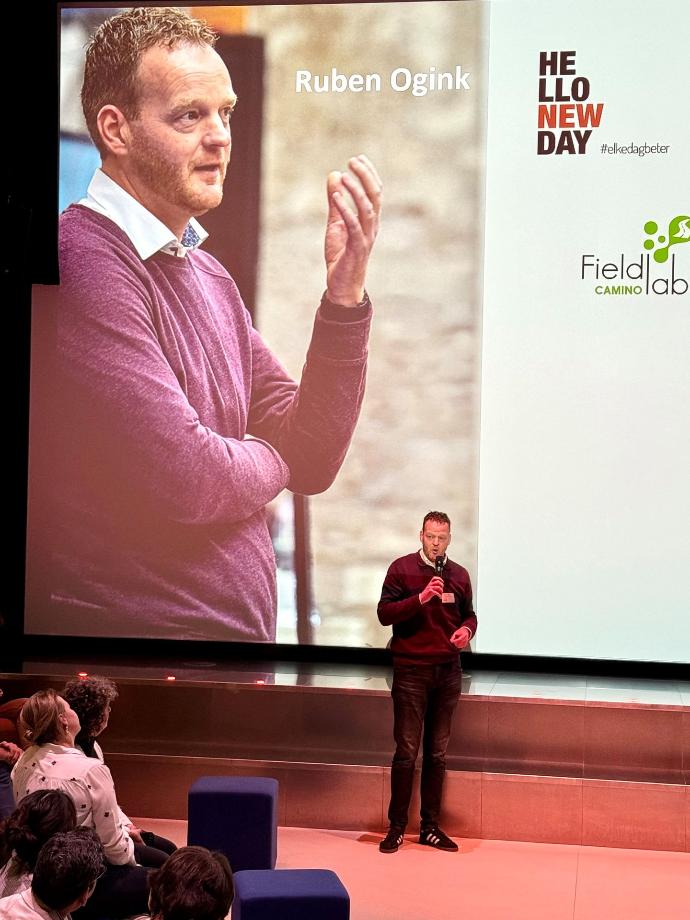
Today, the challenge has become much broader. Increasingly, both public and private infrastructure organisations are moving towards data-driven decision-making. This shift is not only about technology; it also requires significant organisational change.
Formal decision-making processes are evolving as new data sources and analytical methods become part of daily practice. At the same time, trust has become a critical factor. Organisations need confidence not only in expert judgement, but also in the data and algorithms that support decision-making.
Across multiple programmes, organisations are now addressing both the technological and organisational challenges of this transition. Meanwhile, frontrunners are entering a new phase by rethinking contracts between public asset owners and maintenance providers to fully benefit from this new way of working.
During his keynote, Ruben shared valuable experiences, lessons learned and reflections on the next steps for data-driven asset management, illustrating how technology, people and organisational change must go hand in hand to unlock the full potential of data-driven infrastructure management.