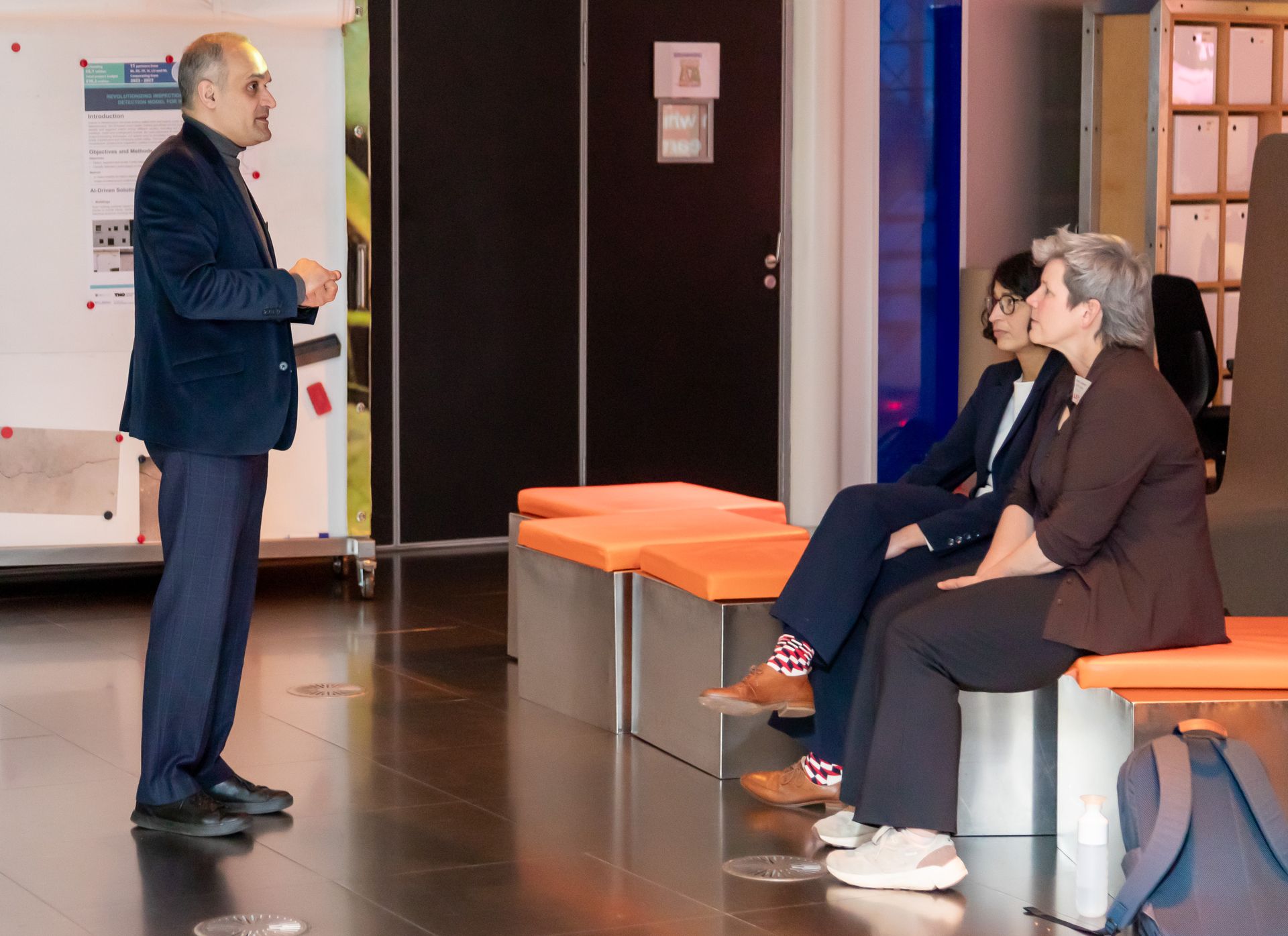
Artificial intelligence, robotics and advanced imaging technologies are opening new possibilities for faster, safer and more reliable infrastructure inspections. In this workshop, Professor Rochdi Merzouki, Mario Sanz-Lopez, Loïc Bal and Timothé Wurmlinger from the University of Lille demonstrated how AI-powered inspection methods can support the early detection of structural damage and contribute to more proactive asset management.
Cracks in materials such as concrete, asphalt and metal remain one of the key indicators of structural deterioration. Detecting these defects at an early stage is essential for safeguarding public safety, maintaining infrastructure integrity, reducing maintenance costs, extending asset lifetimes and supporting more effective preventive maintenance strategies.
Automated Crack Detection with Cameras, Robots and Drones
The workshop explored how innovative technologies are making it possible to detect cracks and structural damage automatically using cameras combined with artificial intelligence. Cameras mounted on helmets, robots and drones capture detailed images of buildings, bridges and even cultural heritage structures. AI-based image analysis then interprets these images and identifies cracks and other signs of deterioration with increasing accuracy.
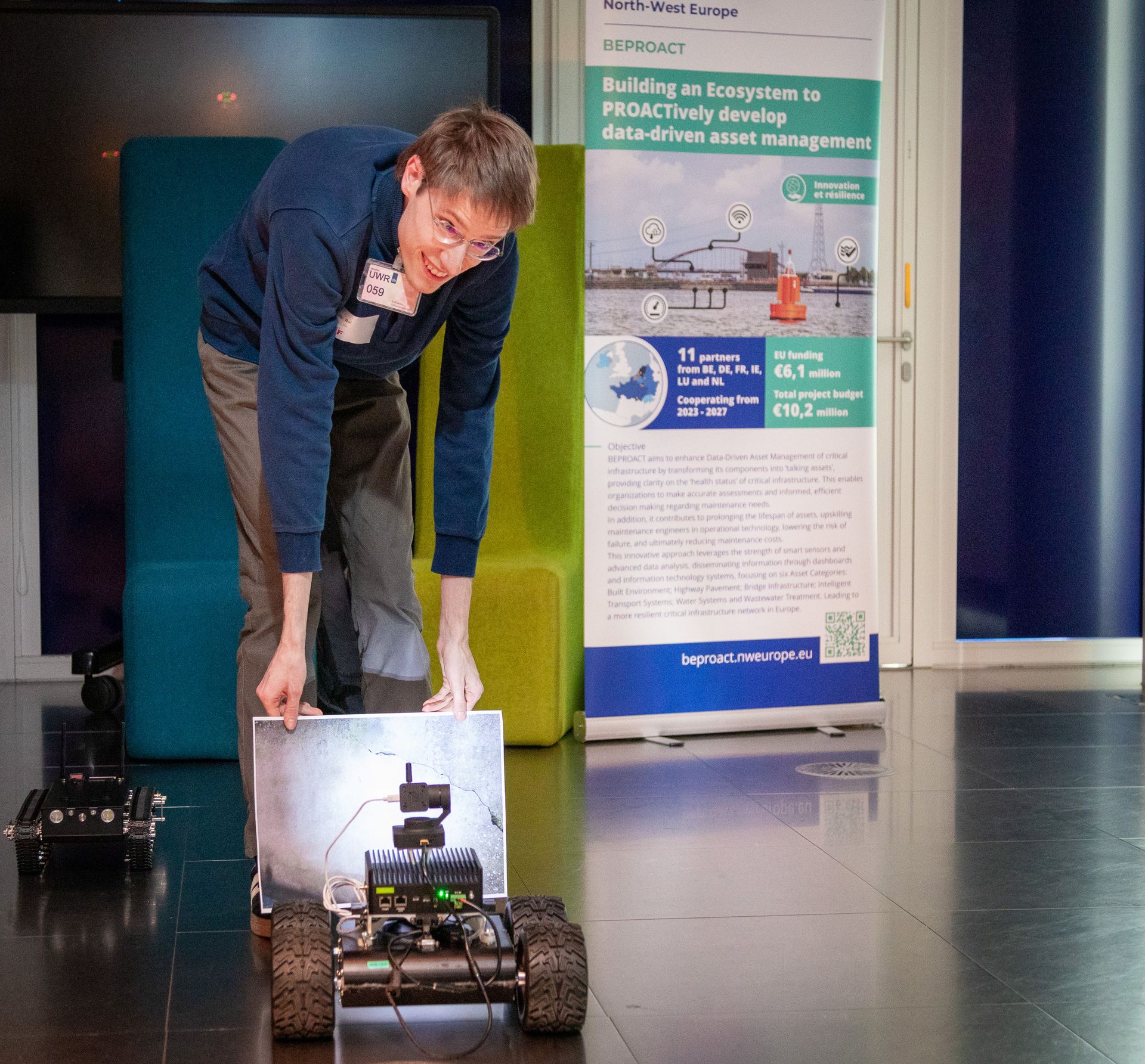
The presenters shared real-world applications from France, where these technologies have already been deployed to inspect buildings and historic structures. These practical examples illustrated both the opportunities and the challenges of introducing automated inspection methods into everyday infrastructure management.
Participants discussed how these technologies operate in practice, the lessons learned so far and one of the key questions for the future: how can asset owners be encouraged to adopt these innovative inspection approaches?
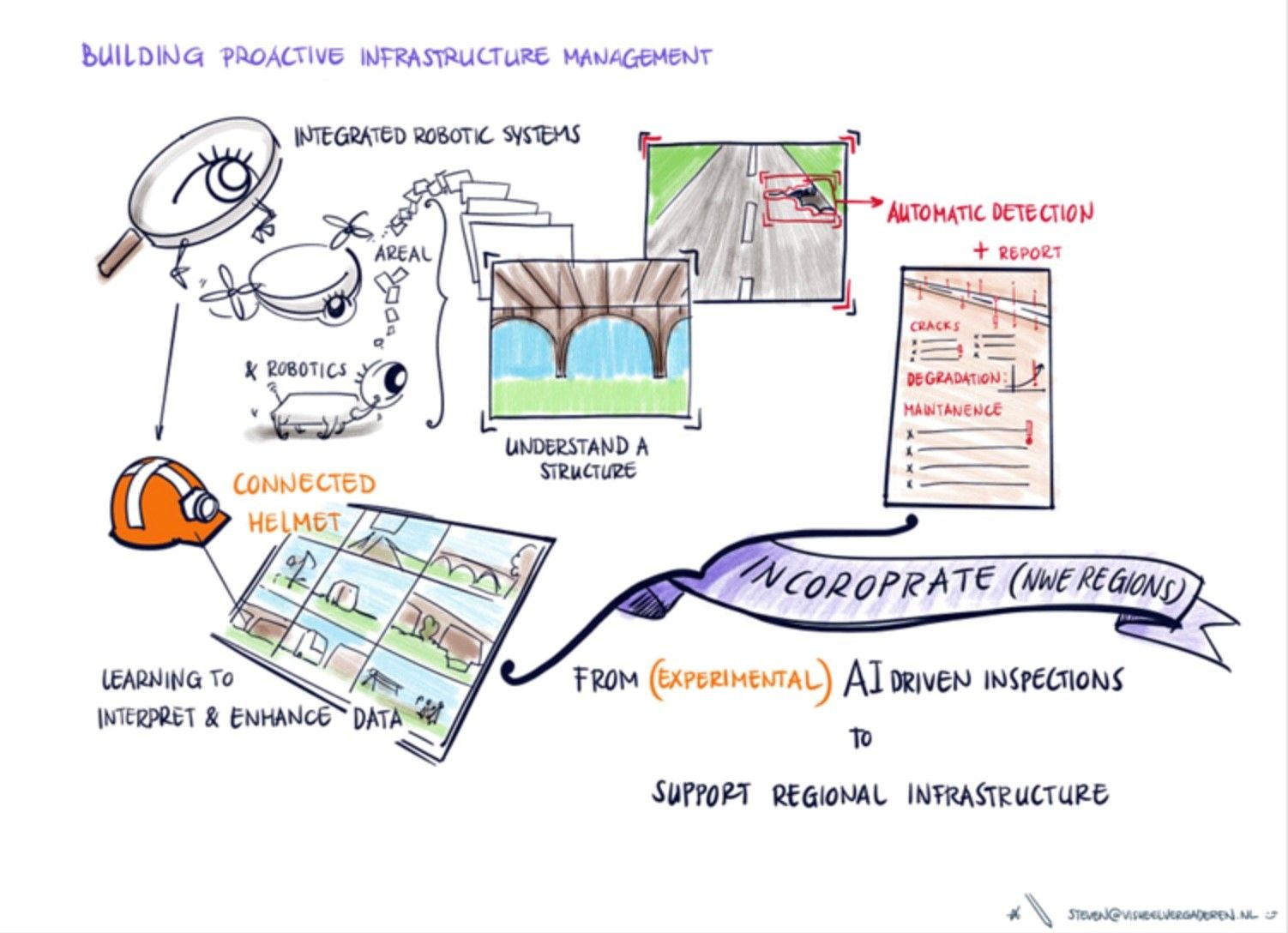
The workshop highlighted the growing potential of AI-driven inspections and explored the steps needed to move from promising technological developments to large-scale implementation in practice.
As demonstrated during the session, BEPROACT shows that proactive, robotic and AI-driven inspection is no longer an experimental concept, but an increasingly mature approach that can support regional infrastructure strategies across North-West Europe.