Bridge Priority Model
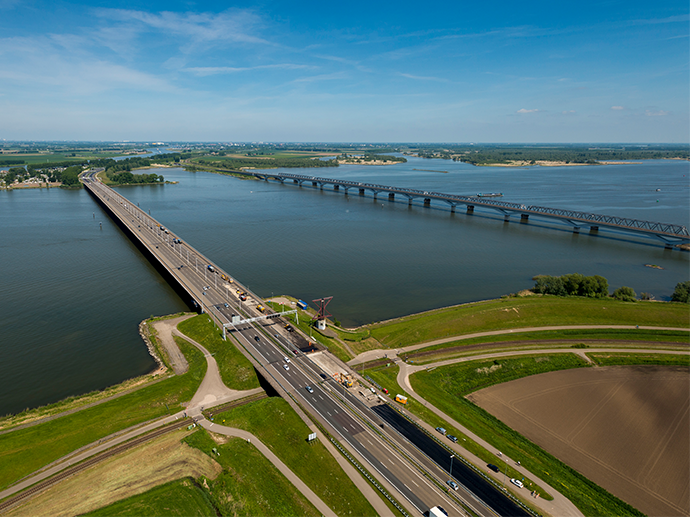
The Netherlands faces a major maintenance challenge: many bridges, tunnels, locks, and pumping stations are aging, while infrastructure use is increasing and technical staff are limited. To tackle this, Rijkswaterstaat and TNO are developing a data-driven asset management approach together with market partners.
In this pilot, a Bridge Priority Model (InfraScan) is created using a semantic framework that links technical observations, failure events, and the physical condition of infrastructure. By applying linked data technologies, scattered datasets and expert knowledge are integrated into a structured, explainable system that supports evidence-based renewal decisions. The InfraScan method uses monitoring data such as wear and usage of bridges to identify whether an asset (or part of an asset) is at ‘risk’.
This approach reduces unexpected failures, lowers maintenance and life-cycle costs, improves safety and availability, and cuts CO2 emissions. It enables early warnings, consistent prioritization, and transparent decision-making across the infrastructure portfolio, providing insights for managing aging bridges efficiently.